
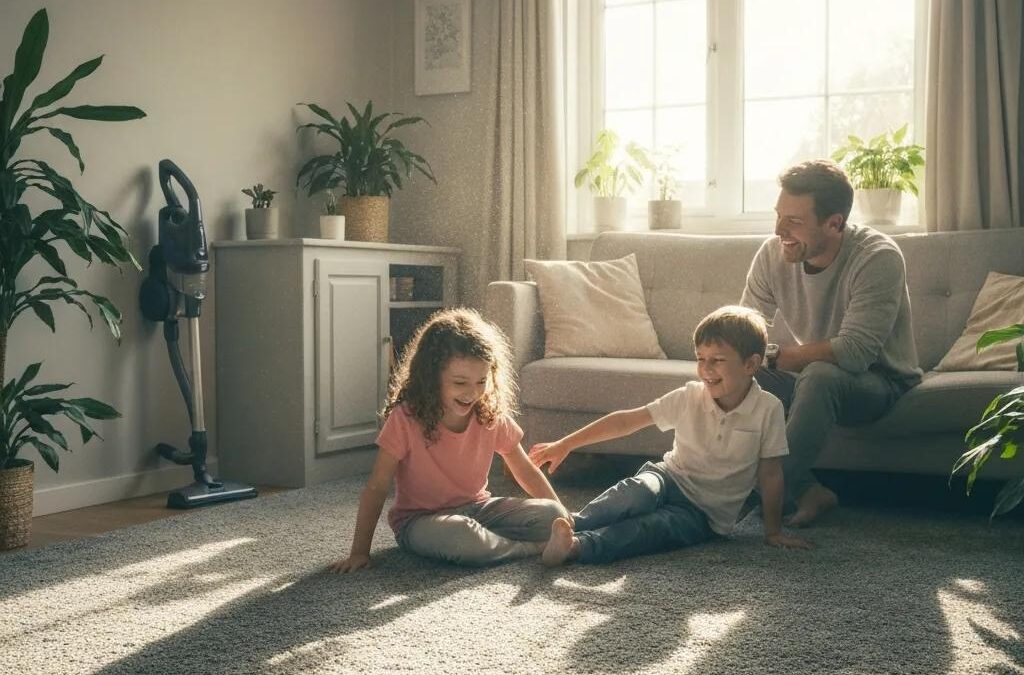
Indoor air quality (IAQ) affects comfort and respiratory health, and carpets often hold dust, pet dander, pollen, and other particles that lower air quality. This guide shows how professional carpet cleaning cuts down allergen levels, reduces airborne particles, and helps Littleton homes and businesses breathe easier. You’ll learn why carpets matter for IAQ, how hot water extraction plus eco-friendly cleaners lift embedded contaminants, what health improvements to expect, and how often to schedule cleaning for the best results. We also share practical care tips, a comparison of cleaning approaches, and clear answers to common concerns like drying time and pet safety—so you can choose the right plan for your family and your carpet.
Why Is Indoor Air Quality Important for Your Littleton Home?
Indoor air quality (IAQ) refers to how clean and safe the air is inside your home and how airborne pollutants affect health and comfort. Poor IAQ can cause throat or eye irritation, worsen allergies and asthma, and make your home feel less comfortable. Carpets play a part because they trap particles and can release them again when walked on or when air moves. Paying attention to Littleton’s pollen seasons, pets, and moisture-related mold risks helps you pick cleaning routines that reduce exposure. The next section breaks down the specific health risks linked to carpet contaminants and who is most affected.
What Health Risks Do Allergens and Pollutants in Carpets Cause?
Carpets can collect tiny allergens and particles that trigger immune reactions and make breathing symptoms worse for sensitive people. Typical effects include more sneezing and congestion, itchy eyes or throat, and an increased chance of asthma flare-ups. Homes with babies, older adults, or people with weakened immune systems are at higher risk. Lowering the allergen load in carpets is a practical, non-drug step to reduce exposure. The list below highlights the main health concerns tied to carpet contaminants.
Carpet-borne pollutants are associated with these health impacts:
- Allergic Rhinitis: More sneezing, runny nose, and itchy eyes from dust mites and pollen trapped in the fibers.
- Asthma Exacerbation: Increased or worse asthma symptoms when airborne triggers are stirred up.
- Respiratory Irritation: Throat and airway irritation from fine particles and lingering VOCs.
These issues show why focused carpet cleaning matters. The next part compares how residential and commercial carpets impact IAQ differently.
How Do Carpets Affect Indoor Air Quality in Residential and Commercial Spaces?
Carpets act like sponges for particles: they collect dust over time and then release it when people walk across them or when air moves through the space. Homes with pets, kids, or heavy foot traffic tend to accumulate pet dander and tracked-in pollen, while commercial areas often build up more dust and soil from many visitors. That means cleaning frequency and methods should match how the space is used: busy, pet-friendly homes usually need deeper, more frequent cleanings than low-traffic rooms. If you live in Littleton and want local help turning these risks into solutions, Sunny Carpet Cleaning offers health-focused care and an easy way to Request a Quote. Next, we explain how professional deep cleaning works.
How Does Sunny Carpet Cleaning Improve Indoor Air Quality with Deep Carpet Cleaning?
Professional deep cleaning improves IAQ by removing what carpets trap: dust, dust mite fragments, pet dander, pollen, and some mold spores. The process combines a pre-treatment to loosen soils, mechanical agitation to lift particles, hot water extraction to dissolve and flush contaminants, and powerful suction to remove moisture and residue — cutting down both allergen reservoirs and the chance they’ll become airborne again. Using low-residue, eco-friendly cleaners lowers leftover VOCs and is safer for sensitive household members. The sections below describe how hot water extraction works and why choosing the right products matters for air quality.
What Is Hot Water Extraction and How Does It Remove Allergens?
Hot water extraction (often called “steam cleaning” by homeowners) uses hot water and cleaning agents to reach deep into carpet fibers, loosen oils and trapped particles, then extracts that water along with the soil. The method usually includes a pre-spray, mechanical agitation, a hot rinse, and high-vacuum recovery. Together, these steps dislodge and remove dust mites, pet dander, and embedded dirt more thoroughly than surface cleaning. The short table below pairs key actions with their IAQ benefits.
This table compares hot water extraction attributes to IAQ outcomes:
| Cleaning Method | Key Attribute | IAQ Impact |
|---|---|---|
| Hot Water Injection | High temperature + solvent action | Breaks down oils and frees trapped particulates |
| High-Power Suction | Strong negative pressure | Removes dislodged allergens and moisture |
| Pre-treatment Agitation | Surfactant + mechanical action | Loosens embedded dust mite fragments and dander |
Together, these steps explain why hot water extraction is effective at reducing allergen reservoirs. The next section explains how eco-friendly product choices further help protect indoor air.
Study: Steam and Heat Treatments Reduce House Dust Mite Allergens
House dust mite allergens can build up in homes. Research looking at combined steam and heat treatments on furnishings found that high heat and steam reduced dust mite antigen loads and could lower bronchial hyperreactivity in people with asthma. In that study, treated mattresses, duvets, and carpets saw measurable reductions after steam and heat application.
The control of allergens of dust mites and domestic pets., MJ Colloff, 1992
How Do Eco-Friendly Cleaning Solutions Enhance Safety and Air Quality?
Eco-friendly cleaners use plant-based surfactants and biodegradable formulas that remove soils while leaving little residue and producing fewer VOCs than many conventional detergents. Less residue means fewer chances for cleaning byproducts to cause irritation later, and low-VOC products reduce off-gassing risks for kids and pets. The table below outlines how eco-friendly options compare to traditional products so you can weigh safety and effectiveness.
Comparing eco-friendly and conventional cleaning products:
| Product Type | Toxicity Profile | Residue & Safety |
|---|---|---|
| Eco-friendly | Low VOC, biodegradable | Minimal residue; safer for pets/children |
| Conventional Detergents | Potential higher VOCs | Can leave more residue and odor |
| Antimicrobial Additives | Targeted pathogen reduction | May require rinsing to reduce residues |
Combining eco-friendly products with hot water extraction delivers strong allergen removal while reducing chemical exposure. At Sunny Carpet Cleaning we use this approach, we stand behind our work with a satisfaction guarantee, and we’re happy to discuss a tailored plan—Request a Quote to learn more.
What Are the Health Benefits of Professional Carpet Cleaning in Littleton?
Professional carpet cleaning reduces airborne and surface allergens, which can lower symptom frequency for people with allergic rhinitis and reduce particle levels in your living spaces. By extracting dust mite fragments, pet dander, and pollen, deep cleaning cuts the pool of triggers that lead to sneezing, congestion, and irritation. For households with sensitive occupants—children, seniors, or those with asthma—these reductions are one part of a broader strategy to manage indoor triggers. The sections below explain how symptom relief happens and which contaminants cleaning targets.
How Does Carpet Cleaning Reduce Asthma and Allergy Symptoms?
Removing the physical triggers—dust mites, dander, and pollen—from carpet fibers lowers the reservoir of particles that become airborne during everyday activity. That means fewer exposures that can provoke allergic and asthmatic reactions. Expert guidance and IAQ best practices recommend source reduction (like deep cleaning) as a useful complement to medical care, not a replacement. Regular professional cleaning, paired with good HVAC filtration and weekly vacuuming, can be an effective part of symptom management. The short list below shows who typically benefits most.
Below is a concise list of who benefits most from professional carpet cleaning:
- Allergy sufferers: Less exposure to dust mites and pollen often means fewer reactions.
- Households with pets: Regular cleaning cuts pet dander and persistent odors.
- Commercial environments: Cleaner carpets reduce particulate levels and improve occupant comfort.
These groups show practical uses for professional cleaning. Next we list the common contaminants that deep cleaning targets.
What Types of Allergens and Pollutants Are Removed by Professional Cleaning?
Professional deep cleaning addresses many contaminants that settle into carpet fibers: dust mites and their fragments, pet dander, tracked-in pollen, mold spores on damp carpets, and accumulated particulate matter from everyday activities. While deep cleaning removes many biological and particulate loads, some gaseous pollutants (certain VOCs) need source control and ventilation in addition to cleaning. The list below summarizes common targets and how well cleaning works on each.
- Dust mites: Mechanical extraction removes mite fragments and waste that trigger allergies.
- Pet dander: Agitation and extraction lift microscopic skin flakes and hair from fibers.
- Pollen: Pre-treatment dissolves residues and rinsing flushes pollen from the pile.
- Mold spores: Physical removal is effective for surface and embedded spores; ongoing moisture must be addressed for lasting control.
- Particulate matter: High-power suction reduces settled particles that can become airborne again.
Removing these contaminants reduces exposure pathways and supports scheduled maintenance. Next we cover how often to clean for the best IAQ results.
How Often Should You Schedule Carpet Cleaning for Optimal Indoor Air Quality?
A good baseline for many homes is one professional deep cleaning per year, increased for households with pets, allergies, children, or heavy foot traffic—where twice yearly or quarterly cleanings often deliver better IAQ. Choose timing based on occupant sensitivity, pets, frequency of spills, and local pollen seasons. More frequent cleaning lowers cumulative allergen buildup and helps protect vulnerable residents. Between professional visits, vacuum with a HEPA-filtered machine, treat spots quickly, and keep HVAC filters fresh to preserve air quality. The following sections outline factors that affect scheduling.
What Factors Influence Cleaning Frequency for Allergy Relief?
Several things determine how often you should deep clean: whether anyone in the home has allergies, how many and what type of pets you have, how much foot traffic the space gets, if children live there, and local climate patterns for pollen or mold. Homes with moderate to severe allergy sufferers or multiple pets often benefit from professional cleaning every 3–6 months. Low-use rooms in allergy-free homes may only need annual attention. HVAC filtration and vacuuming habits also slow or speed re-accumulation of allergens—combine those practices with professional cleaning to set the right schedule. The table below summarizes recommended intervals.
This frequency table maps room/use case to recommended cleaning intervals:
| Use Case | Recommended Interval | Rationale |
|---|---|---|
| High-traffic homes with pets | Every 3 months | Reduces pet dander and heavy soil accumulation |
| Homes with allergy sufferers | Every 3–6 months | Limits allergen reservoirs that trigger symptoms |
| Low-traffic rooms | Annually | Maintains appearance and removes seasonal deposits |
| Commercial spaces | Quarterly to semi-annual | Addresses high foot traffic and occupational IAQ needs |
Adjusting intervals to match these factors gives the best IAQ benefit. Next we explain the longer-term advantages of regular professional maintenance.
How Does Regular Cleaning Maintain a Healthy Home Environment?
Routine professional cleaning breaks the cycle of allergen buildup and re-suspension by removing deep-seated particles before they accumulate. Over time, this leads to fewer symptom episodes for sensitive people, longer carpet life because abrasive soils are removed, and a cleaner look that makes your home more comfortable. Combine professional visits with frequent vacuuming (with a quality filter), quick stain treatment, and humidity control for a full IAQ strategy. Those habits make choosing a trustworthy provider the next logical step—read on for Sunny Carpet Cleaning’s local approach.
Why Choose Sunny Carpet Cleaning for Eco-Friendly and Effective Carpet Cleaning in Littleton?
Sunny Carpet Cleaning is a local Littleton team focused on deep cleaning methods that improve IAQ while minimizing chemical exposure. We rely on hot water extraction and eco-friendly solutions, back our work with a satisfaction guarantee, and center allergen removal as a key service outcome. If you want a balance of effectiveness and safety for kids and pets, we’re available to discuss a tailored plan—Request a Quote to explore options for your home. The sections below outline our guarantees and how customer feedback helps show IAQ improvements.
What Guarantees and Certifications Support Our Quality and Safety?
We offer a satisfaction guarantee and use hot water extraction paired with eco-friendly cleaning products as part of our standard process—these practices help reassure customers about expected results and safety. Additional third-party certifications can add credibility, but clear guarantees and transparent explanations of our methods already do a lot to build trust. Adding structured Review and Service schema to service pages is also a good way to surface those assurances in search results and support our claims. Clear guarantees and visible proof make it easier for you to choose confidently.
How Do Customer Reviews Reflect Our Impact on Indoor Air Quality?
Customers often report noticeable improvements—less odor, fewer allergy flare-ups, and visibly cleaner carpets. We summarize anonymized feedback that highlights health and comfort outcomes so prospective clients get a realistic sense of benefits without sharing private details. Publishing reviews with before/after photos and using Review and Aggregate Rating schema strengthens credibility and helps others understand how professional cleaning can support IAQ. Encouraging customers to mention health impacts makes those results more visible to future clients.
What Are the Most Common Questions About Carpet Cleaning and Indoor Air Quality?
Below are practical answers to questions homeowners ask most often when booking carpet cleaning. The responses are short and direct to help you plan: drying expectations, pet and child safety, scheduling, and how to book. Use them to prepare for service and to decide what to ask when you request a quote.
How Long Does It Take for Carpets to Dry After Cleaning?
After hot water extraction, carpets usually dry in 6–12 hours with good airflow and moderate humidity. Thicker piles or cool, humid conditions can extend drying up to 24 hours. Running fans, opening windows, and managing indoor humidity speeds drying and lowers mold risk. Technicians typically recommend keeping heavy traffic off cleaned areas until they’re dry. Faster drying helps IAQ by reducing time moisture sits in the fibers.
Are Eco-Friendly Carpet Cleaners Safe for Pets and Children?
Eco-friendly cleaners with low VOCs and biodegradable formulas are generally safe for homes with pets and children when used correctly and when carpets are fully rinsed and dried. Best practices include ventilating during and after cleaning, keeping kids and pets off treated areas until dry, and telling your cleaner about any special sensitivities so they can pick the gentlest option. These steps help remove allergens while minimizing chemical exposure.
To schedule a service or discuss a health-focused cleaning plan for Littleton conditions, Request a Quote or make an appointment with Sunny Carpet Cleaning. We’ll help you pick the right frequency and products for your home.
Frequently Asked Questions
How can I tell if my indoor air quality is poor?
Poor indoor air quality often shows up as persistent odors, increased allergy or asthma symptoms, or visible dust buildup. If household members sneeze, cough, or have breathing discomfort more often, airborne pollutants could be the cause. Carpets that look dull or smell musty may be trapping allergens. Regular checks and a professional assessment can help identify problems and the right next steps.
What is the difference between steam cleaning and hot water extraction?
Those terms are often used interchangeably, but there’s a difference. Steam cleaning uses steam vapor to sanitize surfaces; hot water extraction injects hot water mixed with cleaning agents into the carpet fibers and then extracts the liquid along with dirt and allergens. Hot water extraction typically removes embedded contaminants more thoroughly, which is why it’s the preferred method for deep cleaning.
Can carpet cleaning help reduce odors in my home?
Yes. Carpets trap odors from pets, spills, and daily wear. Hot water extraction removes the sources of those odors by deep-cleaning the fibers and removing trapped dirt and allergens. Using eco-friendly solutions helps freshen carpets without leaving harmful residues. Regular cleanings keep your home smelling fresher and support better air quality.
What should I do if my carpet gets stained after cleaning?
Act quickly: blot the stain with a clean, dry cloth to absorb liquid—don’t rub. For many stains, a mild detergent mixed with water or a carpet stain remover works; always test any product on a hidden spot first. If the stain won’t lift, contact your professional cleaner for advice or additional treatment options.
How do I choose the right carpet cleaning service?
Look for a company with solid customer reviews, transparent pricing, and clear information about their methods. Verify they use safe, eco-friendly products and proven techniques like hot water extraction. Ask about experience, any certifications, and satisfaction guarantees. A reputable provider will explain their process and answer your questions so you feel confident about the service.
What are the long-term benefits of regular carpet cleaning?
Regular cleaning improves indoor air quality, extends carpet life, and keeps your home looking and feeling better. Removing allergens and abrasive soils reduces respiratory triggers and prevents premature wear of carpet fibers. Over time, scheduled maintenance saves money by avoiding early replacement and keeps your home healthier for everyone who lives there.
Conclusion
Good indoor air quality matters for health and comfort, and professional carpet cleaning is an effective way to remove allergens and pollutants that hide in carpet fibers. Using hot water extraction combined with eco-friendly solutions reduces respiratory irritants and helps your home feel fresher. Regular cleaning also protects carpet life and supports the wellbeing of sensitive household members. For tailored, health-minded carpet care in Littleton, reach out to Sunny Carpet Cleaning today.